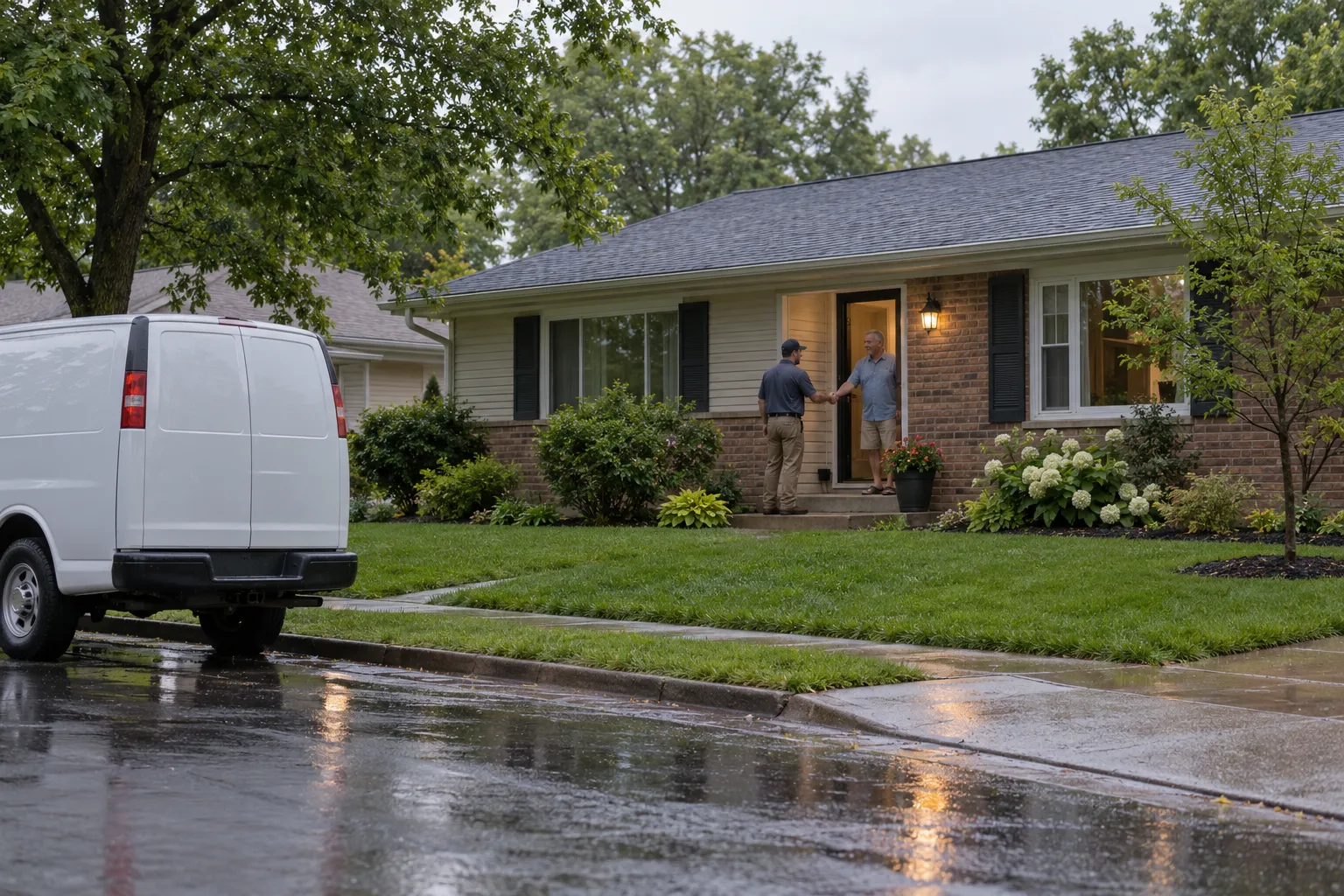
Need home emergency plumbing in Fort Worth?
Send a few details about your plumbing problem and your schedule. Paceoffers Plumbing will point you toward an independent local provider in our network.
No obligationA plumbing emergency never arrives at a good time. It shows up during school runs, work calls, and dinner. Paceoffers Plumbing is a referral service. It connects homeowners across the Fort Worth area with independent local providers who handle urgent plumbing problems.
We do not do the plumbing ourselves. Our job is to help you act in the right order. First, stop the water. Next, describe the problem. Then, plan around life. This page explains what counts as an emergency, what to do while you wait, what repairs may cost, and how to choose a provider you feel good about.
Do these three things in order.
Take a few photos before you start cleaning up. They help the provider and may help with a claim later.
Some problems cannot wait. Treat these as urgent:
If the smell of gas is strong, do not call a plumber from inside the home. Get everyone outside first.
Not every drip is a crisis. A slow faucet drip, a running toilet, or a weak showerhead can often wait. You can shut off the fixture valve and schedule the repair for a quieter day.
When unsure, ask. Describe what you see to the provider and let them judge.
Our climate is hard on a wet house. Summers are hot and humid. Storm season can bring heavy rain. Damp drywall and insulation can grow mold in the warm, moist air, sometimes within a few days.
Many homes here are slab-on-grade ranches. A leak under the slab can hide for a while. Water can also spread through flooring before you see it. Acting early limits the mess and the repair list.
Hard freezes are rare in mild winters. But they happen, and pipes in attics, garages, and crawl spaces can split when they do. Older pier-and-beam houses have exposed pipes under the floor. Those can fail with age, too.
Here is what to do:
A slab leak often shows up as a warm spot on the floor, a hissing sound, or a water bill that jumped. Tell the provider about these signs.
Attics here get very hot, and many water heaters live up there. A leak can soak the ceiling below before anyone notices.
If your tank is leaking:
A small leak at a fitting may be a quick repair. A leak from the tank itself usually means replacement.
If a toilet keeps rising, lift the tank lid and push the flapper down. Then turn the small valve on the wall behind the toilet clockwise. That stops the supply. If water keeps coming up from the drain, that is a different issue. Ask the provider what type of help you need.
First-timers often wonder what happens next. A typical visit goes like this:
You can ask them to explain each step. Good providers are glad to.
A repair should not take over your week. Try these ideas:
Ask how long the work should take. Estimates can change if the provider finds more damage.
Use this short list when you talk to a provider:
Be careful with anyone who pressures you to sign right away. A calm provider will answer your questions.
Take a few minutes to wrap up.
Some policies may cover sudden damage. Check your policy. Providers can often help document damage for a claim.
Providers in our network can look at burst pipes, leaking fittings, and failed supply lines, then explain the repair before they begin work.
Many providers handle leaking tanks, failed valves, and heater swaps for gas or electric units.
Ask for a written quote so you know the price before work starts.
Tell the provider about school runs and work calls so the visit fits your day.
Prices vary by home, parts, access, and the hour you call. These are typical U.S. ranges only. Always ask the provider for a written quote before work begins, and ask what is included.
| Item | Typical range | Notes |
|---|---|---|
| Emergency service visit and diagnosis | $100 – $300 | Often a set fee for the visit. |
| Burst pipe repair | $150 – $1,000 | Depends on pipe type and access. |
| Slab leak repair | $500 – $4,000 | Higher if floors need opening. |
| Water heater repair | $150 – $800 | Parts and tank age matter. |
| Water heater replacement | $1,200 – $3,500 | Tank size and fuel type change it. |
| Shutoff valve replacement | $150 – $500 | Main valves cost more than fixture valves. |
Find the main shutoff valve or the fixture valve and turn it off fully.
Note what you see, where it is, and take a few photos.
Request a callback to check provider availability, or use the request form.
Review the written quote and pick a time that suits your household.
Our steps tell you what to do first, next, and then, so you do not freeze.
We refer you to local providers who do the work. We do not do it ourselves.
Share your schedule so the provider can plan the visit around your family.
Plain words and short steps help you feel calm and ready to ask questions.
Send a few details about your plumbing problem and your schedule. Paceoffers Plumbing will point you toward an independent local provider in our network.
No obligationTurn off the main water shutoff valve. Then open a low faucet to drain the lines and move belongings away from the water. Take photos for your records. After that, call a local provider and describe what happened as clearly as you can.
Often, yes. Turn off the cold water supply and the power or gas to the unit. Then contact a provider. A small drip may be a simple fix, but a leaking tank usually needs replacement.
Request a callback to check provider availability, or send the request form. Paceoffers Plumbing connects you with an independent local provider. Ask for a written quote and confirm they are licensed in your state.
Send a few details about your plumbing problem and your schedule. Paceoffers Plumbing will point you toward an independent local provider in our network.
No obligation